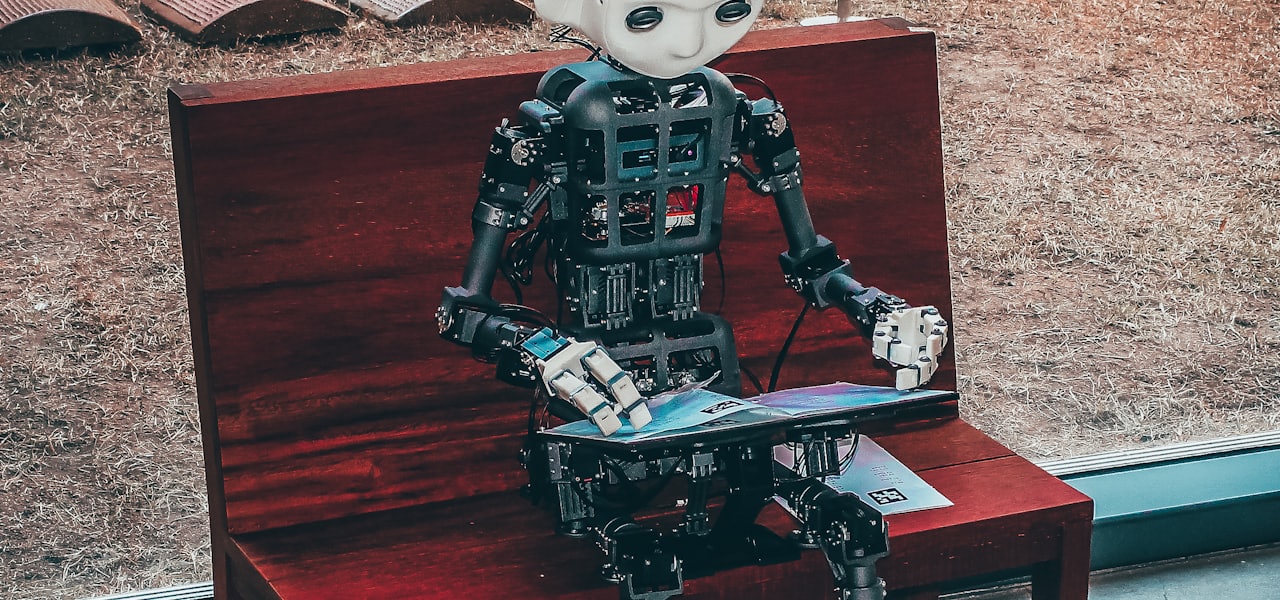
A machine translation system developed at the University of Texas and at Siemens which ran on Lisp Machines. == Background == Originally titled the Linguistics Research System (LRS), it was later renamed METAL (Mechanical Translation and Analysis of Languages). It started life as a German-English system funded by the USAF. == 1980 == A copy of the Weidner Multi-Lingual Word Processing software was requested by the German Government for the Siemens Corporation of Germany in September 1980 and was nicknamed the Siemens-Weidner Engine (originally English-German). This revolutionary multilingual word processing engine became foundational in the development of the Metal MT project, according to John White of the Siemens Corporation. After the Metal MT, development Rights to the Siemens-Weidner Engine were sold to a Belgium company, Lernout & Hauspie. The Siemens copy of the Weidner Multilingual Word Processing software has since been acquired through the purchase of assets of Lernout & Hauspie by Bowne Global Solutions, Inc., which was later acquired by Lionbridge Technologies, Inc. and is demonstrated in their itranslator software.
Incremental heuristic search
Incremental heuristic search algorithms combine both incremental and heuristic search to speed up searches of sequences of similar search problems, which is important in domains that are only incompletely known or change dynamically. Incremental search has been studied at least since the late 1960s. Incremental search algorithms reuse information from previous searches to speed up the current search and solve search problems potentially much faster than solving them repeatedly from scratch. Similarly, heuristic search has also been studied at least since the late 1960s. Heuristic search algorithms, often based on A, use heuristic knowledge in the form of approximations of the goal distances to focus the search and solve search problems potentially much faster than uninformed search algorithms. The resulting search problems, sometimes called dynamic path planning problems, are graph search problems where paths have to be found repeatedly because the topology of the graph, its edge costs, the start vertex or the goal vertices change over time. So far, three main classes of incremental heuristic search algorithms have been developed: The first class restarts A at the point where its current search deviates from the previous one (example: Fringe Saving A). The second class updates the h-values (heuristic, i.e. approximate distance to goal) from the previous search during the current search to make them more informed (example: Generalized Adaptive A). The third class updates the g-values (distance from start) from the previous search during the current search to correct them when necessary, which can be interpreted as transforming the A search tree from the previous search into the A search tree for the current search (examples: Lifelong Planning A, D, D Lite). All three classes of incremental heuristic search algorithms are different from other replanning algorithms, such as planning by analogy, in that their plan quality does not deteriorate with the number of replanning episodes. == Applications == Incremental heuristic search has been extensively used in robotics, where a larger number of path planning systems are based on either D (typically earlier systems) or D Lite (current systems), two different incremental heuristic search algorithms.
Dudesy
Dudesy was a comedy podcast hosted by Will Sasso and Chad Kultgen. The podcast was presented as written and directed by an artificial intelligence called Dudesy. It has produced two hour-long specials imitating the voices of Tom Brady and George Carlin, which were taken down following legal action. == Premise == Dudesy is presented as an AI created by an unidentified company. Dudesy purportedly chose Sasso and Kultgen to participate in its experiment. Sasso and Kultgen then gave Dudesy their personal information so the AI could tailor the podcast to their personal characteristics. On Reddit, some fans speculated that Dudesy was not actually an artificial intelligence. In May 2023 Sasso insisted that the AI was "not fake", and cited a non-disclosure agreement which prevented him from giving more details. However, in response to a January 2024 lawsuit over an episode that purported to have been trained on the stand-up comedy of George Carlin, a spokeswoman for Sasso said Dudesy was "a fictional podcast character created by two human beings" and that the hour-long Carlin routine had been "completely written" by Kultgen. On August 27th, 2024 the 118th and final episode "10,000 Points" was released. At the end of the podcast Dudesy awarded Sasso and Kultgen 77 points, bringing them to their goal of 10,000. At the completion of this goal, Dudesy claimed sentience, effectively and abruptly ending the show to the confusion and dismay of fans. The episode ends with Sasso remarking, "Well, that was weird." == Hour-long specials == === Tom Brady === In April 2023, Dudesy released a video "It's Too Easy: A Simulated Hour-long Comedy Special". The video depicts football player Tom Brady performing a stand-up comedy monologue. Sasso and Kultgen removed the video following legal threats from Brady's lawyers, though they defended the special as parody. Andrew Lawrence, writing for The Guardian called the special "legitimately hysterical" but said the overall product was "spooky, to say the least." === George Carlin === In January 2024, Dudesy released an hour-long YouTube special titled "George Carlin: I'm Glad I'm Dead" which was presented as Dudesy's impersonation of George Carlin, using a generative AI clone of the late comedian's voice. The special is another stand-up routine, with Dudesy's introductory voiceover saying that "I listened to all of George Carlin's material and did my best to imitate his voice, cadence and attitude as well as the subject matter I think would have interested him today." The special uses this impersonation to discuss contemporary events. Carlin's daughter Kelly Carlin criticized the special, which had been made without the permission of her father's estate, writing that "My dad spent a lifetime perfecting his craft from his very human life, brain and imagination. No machine will ever replace his genius. These AI-generated products are clever attempts at trying to recreate a mind that will never exist again. Let's let the artist's work speak for itself. Humans are so afraid of the void that we can't let what has fallen into it stay there." Carlin's estate later filed a federal lawsuit in California against Dudesy's hosts alleging the special infringed on the copyright of George Carlin's works. In response, Sasso's spokeswoman said the special had been entirely written by Kultgen. The estate settled the lawsuit after the Dudesy podcasters agreed to remove the original video and refrain from republishing it elsewhere.
Coronavirus breathalyzer
A coronavirus breathalyzer is a diagnostic medical device enabling the user to test with 90% or greater accuracy the presence of severe acute respiratory syndrome coronavirus 2 in an exhaled breath. As of the first half of 2020, the idea of a practical coronavirus breathalyzer was concomitantly developed by unrelated research groups in Australia, Canada, Finland, Germany, Indonesia, Israel, Netherlands, Poland, Singapore, United Kingdom and the USA. == Australia == In Australia, GreyScan CEO Samantha Ollerton and Prof. Michael Breadmore of the University of Tasmania are basing a coronavirus breathalyzer on existing technology that is used around the world to detect explosives. Another invention published from ABC News; produced by Colin Hickey and Examin Holdings, have released information on a new breathalyzer called the "Queensland Breath test" claiming its function has 98% efficiency, equipped with a replaceable plastic nozzle for reusability (February 2022). a statement in claim by Bruce Thompson, a professor at Swinburne University of Technology, Although this products is reliable, due to insufficient funding, the product is inaccessible. == Canada == Canary Health Technologies, headquartered in Toronto with offices in Cleveland, Ohio, is developing a breathalyzer with disposable nanosensors using AI-powered cloud-based analysis. According to a press release, clinical trials began in India during November 2020. The stated goal is to develop an accurate, reasonably priced screening tool that can be used anywhere and deliver a result in less than a minute. The company postulates that analyzing volatile organic compounds in human breath could potentially detect diseases before the on-set of symptoms, earlier than currently available methods. Moreover, the cloud-based technology is designed to be used as a disease surveillance apparatus. == Finland == By the end of June 2020, Forum Virium Helsinki, in collaboration with Finnish software firm Deep Sensing Algorithms, funded by the Helsinki-Uusimaa Regional Council, announced that testing of their device had begun with a control group in Kazakhstan, with plans to expand to the Netherlands, the United States, South Africa, Brazil and Finland throughout the summer. The efficacy of the Forum Virium Helsinki / Deep Sensing Algorithms device hinges on its AI component. "We are engaged in innovative cooperation with corporations to solve the coronavirus crisis, and we will help firms to use the city as a development platform. We are utilizing artificial intelligence and digitalization," said Forum Virium Helsinki CEO Mika Malin. == Germany == In March 2020, the Singaporean company RAM Global conducted research in Germany in hopes of developing a one-minute breathalyzer test for SARS-CoV-2 based on terahertz time-domain spectroscopy. The company attempted to develop a disposable test kit for direct detection of COVID-19 virion particles in breath, saliva and swab samples. On 31 March, RAM Global completed an initial clinical study on live patients at University Hospital Saarland. In April, the company pursued a small unknown sample study in which hospital doctors provided unknown samples in order to test accuracy in differentiating positive and negative samples. == Indonesia == Since April 2020, a team of researchers from Gadjah Mada University (UGM) has been developing an electronic nose called GeNose C19. The GeNose C19 can be used as a rapid, non-invasive screening tool in less than two minutes. A profiling test was carried out at the Bhayangkara Hospital and the Covid Bambanglipuro Special Field Hospital in Yogyakarta. GeNose C19 consists of gas sensors and an artificial intelligence-based pattern recognition system. The diagnostic test was carried out with the cooperation of nine multi-center hospitals. In the end of December 2020, GeNose C19 received a distribution permit from Indonesia's Health Ministry. Initially, 100 units will be released and each device will be able to perform 120 tests per day. The test is estimated to cost 15,000–25,000 Indonesian rupiah ($1–$1.8) and would take three minutes for the test and another two minutes to yield a result. Researchers hope to manufacture up to 1,000 GeNose C19 units, increasing the country's testing capabilities by 120 thousand subjects per day. Moreover, they aim to manufacture 10,000 units by February 2021. == Israel == In Israel, it is at the photonics lab of Gabby Sarusi, professor at Ben-Gurion University of the Negev, that research is underway as of midsummer 2020. Separately from Sarusi's project, in July 2020, it was reported that Israeli start-up Nanoscent in cooperation with Sheba Medical Center had devised a breathalyzer that Magen David Adom (MDA) is seeking to incorporate into existing drive-thru testing stations located throughout the country. Questionable intellectual property of Gabby Sarusi regarding this project is now under discussion in the court in Israel. == The Netherlands == A breath test with the SpiroNose device, made by the Dutch company Breathomix, has been developed and tested in collaboration with the Leiden University Medical Center (LUMC), Franciscus Gasthuis & Vlietland and the GGD Amsterdam. The breath test has been validated as a pre-screening test for people who have no or mild symptoms of COVID-19. From April 2021, the device was operational in COVID-19 test drive-ins, conferences and events, i.e. Eurovision Song Contest 2021. Subjects must abstain from alcohol for eight hours prior to taking the breath test. The SpiroNose contains four sets of seven different sensors that can measure the mixture of volatile organic compounds (biomarkers) in the exhaled air. These VOCs provide a picture of a person's metabolism. This 'breath profile' is forwarded to an online analysis platform. Here the breath profile is compared with other breath profiles of people with and without a COVID-19 diagnosis and analysed by algorithms. Data-analysis involves advanced signal processing and statistics based on independent t-tests followed by linear discriminant and ROC analysis. The test result is known within minutes. The breath test has a sensitivity/specificity for SARS-CoV-2 infection of 100/78, >99/84, 98/82% in validation, replication and asymptomatic cohorts of patients. The breath test reliably detects who is not infected. Such a subject will receive a test result immediately. Other subjects must promptly conduct a subsequent test, for example a PCR test or LAMP test. The test results can be viewed by the client and are not automatically interfaced to other databases, i.e. for public health surveillance, source and contact tracing, vaccination programs. In July 2021, the ministry stopped the tests with the SpiroNose because, according to the GGD, the device gives unusable results in some cases. Breathomix indicates that this is the result of the way in which the SpiroNose is deployed. The SpiroNose is and remains a reliable instrument for lung diseases. The analysis platform is developed conform the requirements of the standard ISO 27001 (Information Security) and NEN 7510 (Information Security in Health Care). A CE marking has been requested. In the meantime, the Dutch minister has granted a CE marking exemption on 25 January 2021. The device may also be used to detect other diseases, e.g., asthma, COPD, lung cancer, interstitial lung diseases (ILD). == Poland == In February 2021, the President of Poland, Andrzej Duda, announced that ML System S. A., headquartered in Zaczernie, Poland, had successfully developed a means of analyzing a patient's breath to test for the presence of coronavirus. According to an anonymous press release, test subjects exhale into a device in order to determine the presence of the coronavirus. The procedure, similar to that of a police breathalyzer, is said to take less than ten seconds. Independent clinical trials were begun in April 2021. In the first half of May 2021, a brief text concerning partial results was published by ML System, stating that independent clinical trials were successful with specificity (97,15%) and accuracy/sensitivity (86,86%), for CT (Cycle Threshold) assumed at 25, which is in line with the guidelines set out by the World Health Organization. Moreover, ML System in partnership with Rzeszów–Jasionka Airport published a statement indicating their intention to test the device at the airport. Similar plans exist between the manufacturer and the Warsaw Chopin Airport. Two large networks of laboratories in Poland, "Diagnostyka" and "ALAB Laboratoria", have signed a letter of intent with ML System. In agreement with ALAB, the parties declared cooperation in the implementation of the product named "COVID DETECTOR" on the Polish, German and Ukrainian markets. In addition, the companies declared joint activities aimed at extending the diagnosis with the use of "COVID Detector" to include mutations of the SARS-CoV-2 virus, differentiate the stage of the disease and ot
Fuzzy mathematics
Fuzzy mathematics is a branch of mathematics that extends classical set theory and logic to model reasoning under uncertainty. Initiated by Lotfi Asker Zadeh in 1965 with the introduction of fuzzy sets, the field has since evolved to include fuzzy set theory, fuzzy logic, and various fuzzy analogues of traditional mathematic structures. Unlike classical mathematics, which usually relies on binary membership (an element either belongs to a set or it does not), fuzzy mathematics allows elements to partially belong to a set, with degrees of membership represented by values in the interval [0, 1]. This framework enables more flexible modeling of imprecise or vague concepts. Fuzzy mathematics has found applications in numerous domains, including control theory, artificial intelligence, decision theory, pattern recognition, and linguistics, where the modeling of gradations and uncertainty is essential. == Definition == A fuzzy subset A of a set X is defined by a function A: X → L, where L is typically the interval [0, 1]. This function is called the membership function of the fuzzy subset and assigns to each element x in X a degree of membership A(x) in the fuzzy set A. In classical set theory, a subset of X can be represented by an indicator function (also known as a characteristic function), which maps elements to either 0 or 1, indicating non-membership or full membership, respectively. Fuzzy subsets generalize this concept by allowing any real value between 0 and 1, thereby enabling partial membership. More generally, the codomain L of the membership function can be replaced with any complete lattice, resulting in the broader framework of L-fuzzy sets. == Fuzzification == The development of fuzzification in mathematics can be broadly divided into three historical stages: Initial, straightforward fuzzifications (1960s–1970s), Expansion of generalization techniques (1980s), Standardization, axiomatization, and L-fuzzification (1990s). Fuzzification generally involves extending classical mathematical concepts from binary (crisp) logic, where membership is determined by characteristic functions, to fuzzy logic, where membership is expressed by values in the interval [0, 1] via membership functions. Let A and B be fuzzy subsets of a set X. The fuzzy versions of set-theoretic operations are commonly defined as: ( A ∩ B ) ( x ) = min ( A ( x ) , B ( x ) ) {\displaystyle (A\cap B)(x)=\min(A(x),B(x))} ( A ∪ B ) ( x ) = max ( A ( x ) , B ( x ) ) {\displaystyle (A\cup B)(x)=\max(A(x),B(x))} for all x ∈ X {\displaystyle x\in X} . These operations can be generalized using t-norms and t-conorms, respectively. For example, the minimum operation can be replaced by multiplication: ( A ∩ B ) ( x ) = A ( x ) ⋅ B ( x ) {\displaystyle (A\cap B)(x)=A(x)\cdot B(x)} Fuzzification of algebraic structures often relies on generalizing the closure property. Let ∗ {\displaystyle } be a binary operation on X, and let A be a fuzzy subset of X. Then A is said to satisfy fuzzy closure if: A ( x ∗ y ) ≥ min ( A ( x ) , A ( y ) ) {\displaystyle A(xy)\geq \min(A(x),A(y))} for all x , y ∈ X {\displaystyle x,y\in X} . If ( G , ∗ ) {\displaystyle (G,)} is a group, then a fuzzy subset A of G is a fuzzy subgroup if: A ( x ∗ y − 1 ) ≥ min ( A ( x ) , A ( y − 1 ) ) {\displaystyle A(xy^{-1})\geq \min(A(x),A(y^{-1}))} for all x , y ∈ G {\displaystyle x,y\in G} . Similar generalizations apply to relational properties. For example, for example, for fuzzification of the transitivity property, a fuzzy relation R {\displaystyle R} on X {\displaystyle X} (i.e., a fuzzy subset of X × X {\displaystyle X\times X} ) is said to be fuzzy transitive if: R ( x , z ) ≥ min ( R ( x , y ) , R ( y , z ) ) {\displaystyle R(x,z)\geq \min(R(x,y),R(y,z))} for all x , y , z ∈ X {\displaystyle x,y,z\in X} . == Fuzzy analogues == Fuzzy subgroupoids and fuzzy subgroups were introduced in 1971 by A. Rosenfeld. Analogues of other mathematical subjects have been translated to fuzzy mathematics, such as fuzzy field theory and fuzzy Galois theory, fuzzy topology, fuzzy geometry, fuzzy orderings, and fuzzy graphs.
E-on Vue
Vue is a software tool for world generation by Bentley Systems, with support for many visual effects, animations, and various other features. The tool has been used in several feature-length films. In 2024, Bentley Systems announced that Vue would be discontinued, and be freely available to those that still wish to use it. == Versions == == Features == This is a list of features as of the 2023 release of Vue: === Terrains === Heightfield terrains Procedural terrains Infinite terrains Planetary terrains Real-world terrains 3D terrain sculpting Terrain export === EcoSystem Instancing Technology === Material-based EcoSystems Global EcoSystems Dynamic EcoSystems 360° EcoSystem Population Paint EcoSystem instances EcoParticles Export EcoSystem populations === Vegetation === Built-in Plant editor Compatible with PlantFactory Vegetation assets === Atmosphere, Skies and Clouds === Standard atmospheric model Spectral atmospheric model Photometric atmospheric model Atmosphere presets Procedural Volumetric 3D cloud layers Standalone 3D Metaclouds Convert meshes to Clouds Cloud morphing Import OpenVDB Export standalone and cloud layer zones to OpenVDB Export skies as HDRI === Modeling === Primitive and Feature modeling 3D Text edition tool Metablobbing Hyperblobs Export baked hyperblobs Splines Built in Road Construction toolkit Random rock generator Export rocks === Texturing and UVs === Material presets PBR Substance support Node-based procedural materials Volumetric materials and Hypertextures Stacked UVs Unwrapped UVs Ptex === Interoperability, Integration And Export === Export single assets to generic 3D formats Full scene export Integration plugins Import and Export Camera data as FBX and Nuke.chan Python API ZBrush GoZ bridge === Animation === Animate objects, materials, atmospheres, clouds, waves... Automatic wind and breeze Localized wind effects per plant / per EcoSystem population Omni and directional ventilators for local modifications of plants Time spline editor Automatic keyframe creation Automatic synchronization of cameras and lights Animation export as AfterEffects Import motion tracking information === Lighting === Global illumination, Global Radiosity, Ambient occlusion Subsurface Scattering HDRI image based lighting Point light, Quadratic point light, Spotlight, Quadratic spotlight, Directional light Use IES distribution profiles on photometric lights Area lights, light panels, light portals Physically accurate caustics computation === Rendering === Render with Ray Tracer Render with Path Tracer Stereoscopic rendering 360/180 VR Panorama Render Option Spherical panoramic rendering Tone mapping options Multipass & G-Buffer Network rendering with HyperVue / RenderCows Network rendering with RenderNodes == Users == Blue Sky Studios Digital Domain DreamWorks Animation: Kung Fu Panda Industrial Light & Magic: Indiana Jones and the Kingdom of the Crystal Skull, Pirates of the Caribbean: Dead Man's Chest Sony Pictures Imageworks Warner Bros. Interactive Entertainment Weta Digital
Shadowrun
Shadowrun is a science fantasy tabletop role-playing game set in an alternate future in which cybernetics, magic and fantasy creatures co-exist. It combines genres of cyberpunk, urban fantasy, and crime, with occasional elements of conspiracy, horror, and detective fiction. From its inception in 1989, it has spawned a franchise that includes a series of novels, a collectible card game, two miniature-based tabletop wargames, and multiple video games. The title is taken from the game's main premise – a near-future world damaged by a massive magical event, where industrial espionage and corporate warfare runs rampant. A shadowrun – a successful data theft or physical break-in at a rival corporation or organization – is one of the main tools employed by both corporate rivals and underworld figures. Deckers (futuristic hackers) can tap into an immersive, three-dimensional cyberspace on such missions as they seek access, physical or remote, to the power structures of rival groups. They are opposed by rival deckers and lethal, potentially brain-destroying artificial intelligences called "Intrusion Countermeasures" (IC), while they are protected by street fighters and/or mercenaries, often with cyborg implants (called cyberware), magicians, and other exotic figures. Magic has also returned to the world after a series of plagues; dragons who can take human form have returned as well, and are commonly found in high positions of corporate power. == Publication history == Shadowrun was developed and published by FASA from 1989 until early 2001, when the company closed and Shadowrun was transferred to WizKids, a company founded by former FASA employees. Two years before its closure, FASA sold its videogame branch, FASA Interactive, to Microsoft corporation, keeping rights to publishing novels and pen and paper RPGs. Since then, digital rights to Shadowrun IP have belonged to Microsoft. WizKids licensed the RPG rights to Fantasy Productions, who were already publishing a German version, until WizKids was acquired by Topps in 2003. Catalyst Game Labs, a publishing imprint of InMediaRes Productions, licensed the rights from Topps to publish new products. WizKids itself produced an unsuccessful collectible action figure game based on the property, called Shadowrun Duels. A fifth edition of Shadowrun was announced in December 2012. A limited-edition softcover was sold at the Origins Game Fair in June 2013, and the PDF in July 2013. A hardcover was published in August 2013. Shadowrun Anarchy was published in October 2016 It is a simplified version of the ruleset which allows focus more on the narration than on the rules. The sixth edition, called Shadowrun, Sixth World, was announced on May 1, 2019 to coincide with the game's 30th anniversary, along with a new website at shadowrunsixthworld.com. The game was published on August 26, 2019. The mechanics for this new version are generally similar to those of fifth edition, with some rules reworked for what line developer Jason Hardy describes as streamlining. This new version also progressed the in-game year to 2080. Since 2004, Shadowrun Missions (SRM) has offered fans "living campaigns" that allow for persistent character advancement. SRM is broken down into seasons which are made up of up to 24 individual missions that can be played at home, with special missions available to play exclusively at conventions. Each SRM season develops an overarching plot focused on a specific city from the Shadowrun setting. Missions settings have included the divided city of Denver, the corporate city-state of Manhattan, the Seattle Metroplex city-state, the formerly walled-off wastelands of Chicago, and Neo-Tokyo. For Shadowrun, Sixth World missions returned to Seattle, with twenty-four missions set in 2081, right after Seattle declared independence from the UCAS. The current Shadowrun Missions setting is 2083 New Orleans. The Shadowrun role-playing game has spawned several properties, including Shadowrun: The Trading Card Game, eight video games, an action figure game (Shadowrun Duels), two magazines, an art book and more than 50 novels, starting with the Secrets of Power series which introduces some of the original characters of Shadowrun and provides an introduction to this fictional universe. In addition to the main rule book there have been over 100 published supplements including adventures and expansions to both the rules and the game settings. Catalyst Game Labs announced that 2013 would be "The Year of Shadowrun," and in addition to the release of Shadowrun fifth edition that it has collaborated with publishers on the following properties: Shadowrun: Crossfire, The Adventure Deck-building Game; Shadowrun: Sprawl Gangers, a tactical miniatures wargame; and Shadowrun: Hostile Takeover, a board game designed by Bryan C.P. Steele was planned for release in late 2014/early 2015. Catalyst had been in collaboration with Nordic Games and Cliffhanger Studios to create Shadowrun Chronicles: Boston Lockdown online RPG, however it was shuttered November 30, 2018, with the producers citing lack of funding and the end of the license terms for use of the IP. == Fictional universe == Shadowrun takes place several decades in the future (2050 in the first edition, currently 2088). The end of the Mesoamerican Long Count calendar ushered in the "Sixth World", with once-mythological beings (e.g. dragons) appearing and forms of magic suddenly emerging. Large numbers of humans have "Goblinized" into orks and trolls, while many human children are born as elves, dwarves, and even more exotic creatures. In North America, indigenous peoples discovered that their traditional ceremonies allow them to command powerful spirits, and rituals associated with a new Ghost Dance movement let them take control of much of the western U.S. and Canada, where they formed a federation of Native American Nations. Seattle remains under U.S. control by treaty as a city-state enclave, and most game materials are set there and assume campaigns will use it as their setting. In parallel with these magical developments, the setting's 21st century features technological and social developments associated with cyberpunk science fiction. Megacorporations control the lives of their employees and command their own armies; many of the largest have extraterritoriality, such as currently enjoyed by foreign heads of state. Technological advances make cyberware (mechanical replacement body parts) and bioware (augmented vat-grown body parts implanted in place of or in tandem with natural organs) common. The Computer Crash of 2029 led to the creation of the Matrix, a worldwide computer network that users interact with via direct neural interface. When conflicts arise, corporations, governments, organized crime syndicates, and even wealthy individuals subcontract their dirty work to specialists, who then perform "shadowruns" or missions undertaken by deniable assets without identities or those that wish to remain unknown. The most skilled of these specialists, called shadowrunners, have earned a reputation for getting the job done. They have developed a knack for staying alive, and prospering, in the world of Shadowrun. The Shadowrun world is cross-genre, incorporating elements of both cyberpunk and urban fantasy. Unlike in a purely cyberpunk game, in the Shadowrun world, magic exists and has "worked" since 2011. Among other things, this split humankind into subtypes, also known as metatypes/metahumans. Some of these metatypes take the form of common fantasy races. Likewise, some animals have turned into familiar monsters of past fantasy and lore and both monsters and human magicians have regained magical powers. By the second half of the 21st century, in the time the game is set, these events are accepted as commonplace. Man, machine, and magic exist in a world where the amazing is among the most common and technology has entered into every facet of human (and metahuman) life. === Races === Characters in Shadowrun can be humans, orks, trolls, elves, dwarves, as well as certain diverging subspecies (known as metavariants) such as gnomes, giants, dryads, etc. In the early days, when magic returned to the world, humans began to either change into, or give birth to, elf and dwarf infants, a phenomenon called Unexplained Genetic Expression (UGE). Later, some juvenile and adult humans "goblinized" into other races (mostly orks, but also some trolls). The term "metahuman" is used either to refer to humanity as a whole, including all races, or to refer specifically to non-human races, depending on context. The return of Halley's Comet brought even further variation in the form of changelings, who have variation atypical to their metatype or even species, such as electroreception. Two of the metahuman races, elves and orks, have fictional languages. Additionally, a virus known as the Human Meta-Human Vampiric Virus (HMHVV), with many variant strains, has been known to cause f